
personal
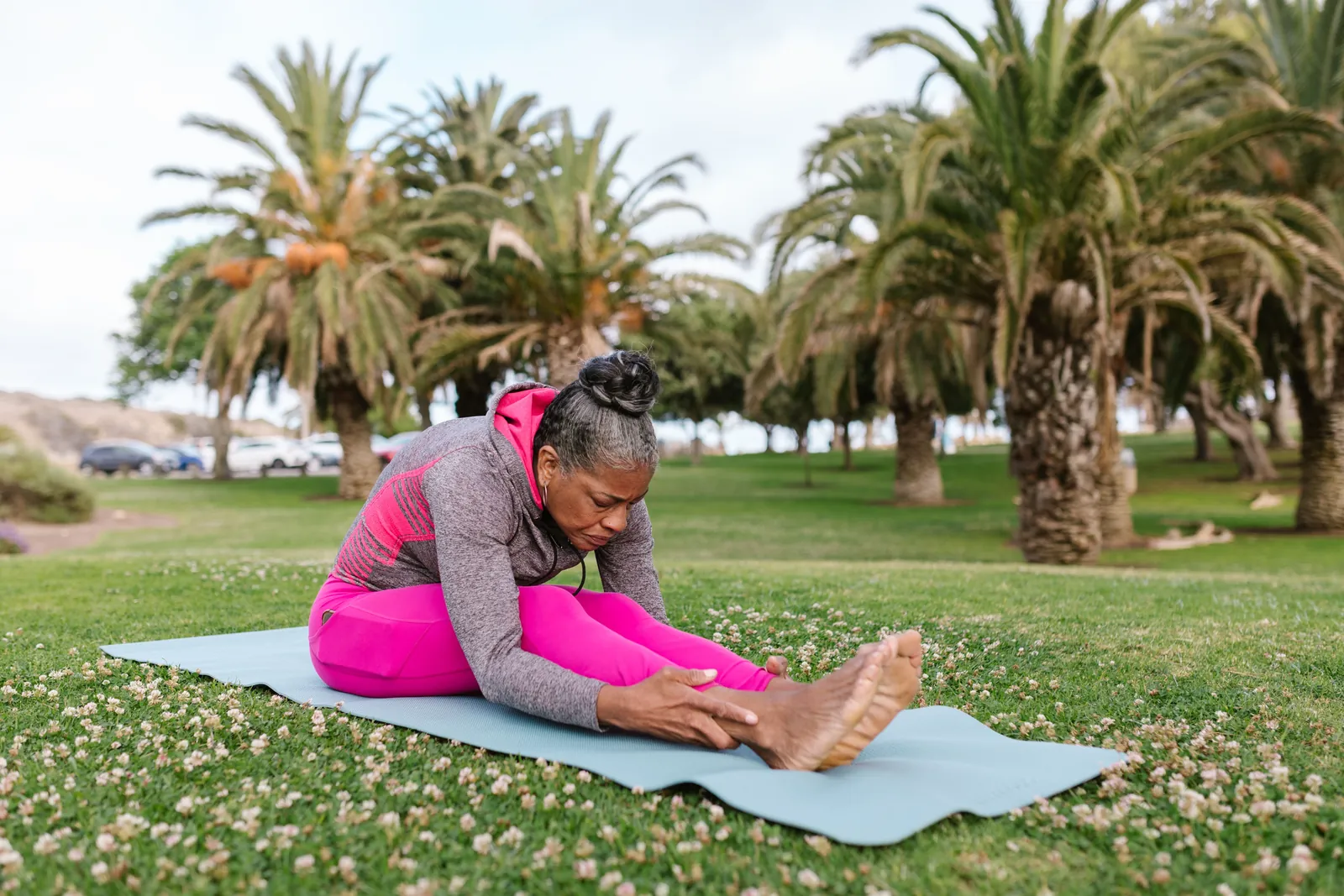
You sit for hours in a deep fold, reach for the floor, and instead of ease you get a sharp, pulling, or even burning pain under the knees. Or the dream is front or middle splits, but progress froze on one point and every session feels like torture. In practice with thousands of students I keep seeing the same error. People think they have “stiff muscles” or “bad genetics.” Often the real block is a pinched sciatic nerve, not short tendons. To fix it, restore flexibility, and fold the body without pain, we need neurodynamics — a modern way of working with the nervous system.
After more than 15 years teaching deep stretching I use one rule: the body will not let you into a range it considers dangerous. The nervous system is the control center. Muscles do not contract or relax on their own; they obey brain and spinal cord. Muscle tissue and nerve tissue are not the same.
Muscle has huge elasticity. With the right approach it can lengthen without pain. Nerve tissue is different. The sciatic nerve is the longest, thickest nerve in the body. It starts in the lumbar spine, runs through the glutes, down the back of the thigh to the foot. Unlike muscle, nerve barely stretches. After a few percent of extra length, its blood flow fails and the brain hits the alarm.
In a normal forward fold or splits, the sciatic nerve should glide inside muscle and fascia — “intraneural mobility.” Sitting, old injuries, piriformis spasm, or general overload can “glue” the nerve to surrounding tissue.
Any stretch then tugs that stiff cable. The brain knows more tension will damage the nerve. It fires a strong reflex contraction of the hamstrings and calf. You feel savage pain under the knee, the muscles turn to stone, and the fold locks. You can stretch for years through pain; without restoring nerve glide you stay put and only injure ligaments.
Before training, find out whether you are dealing with short muscle or limited nerve motion.
If lifting the head clearly reduces or removes the pain under the knee or in the thigh, the sciatic nerve is taut and limited. Raising the head shortens the neural path from above, so the leg eases. If it were only stiff hamstrings, head position would not change the sensation in the leg — those muscles do not attach to the neck.
Neurodynamics is a set of drills that restore glide, motion, and blood supply of nerve trunks relative to muscle and fascial beds.
Instead of crude static stretching (which worsens a pinned nerve), we use “nerve flossing.” Picture a thread stuck in a narrow channel. Pull both ends and it jams harder. Slide it back and forth — tension on one end, slack on the other — and it starts to move.
Do this before every splits session.
Start with a personal online training session
Book a training sessionSecure payment via Stripe
Start with a personal online session
Book a training sessionSecure payment via Stripe